

Minelaying watch for MCM
HORUS doesn’t hunt mines. It watches waterways for the vessels and rockets that lay them, so MCM teams know when and where mines may have gone in, without crewed ships sitting on station.
Why it’s hard today
Mines are cheap to lay and slow to clear. Knowing that a vessel or rocket put something in the water, and where, narrows the search, but watching every channel and approach around the clock with crewed assets is expensive.
How HORUS does it
- 1
Hold station
HORUS vehicles sail to channels, approaches and choke points and hold a 30 m station-keeping radius on wind and sun, with no fuel and no crew.
- 2
Watch for deployment
Camera, above-water microphones, hydrophones and the AIS receiver watch for vessels behaving like minelayers and for rockets or other launches into the water.
- 3
Mark the time and place
On-board processing flags the event with time and position, giving MCM teams a starting point instead of a whole area to search.
- 4
Report and relay
Alerts go out by satellite, LTE or mesh radio, and HORUS keeps watching and reporting conditions for the clearance work that follows.
Sensors and payloads
- AIS receiver (standard)
- Edge processing for exception-based alerts
- Hydrophones and acoustic arrays in the dry lower payload bay
- Masthead camera and above-water microphones
- Satellite, LTE and mesh radio (Doodle, Silvus and others)
Payloads are configured around the mission. See the HORUS specifications for power, comms and payload details.
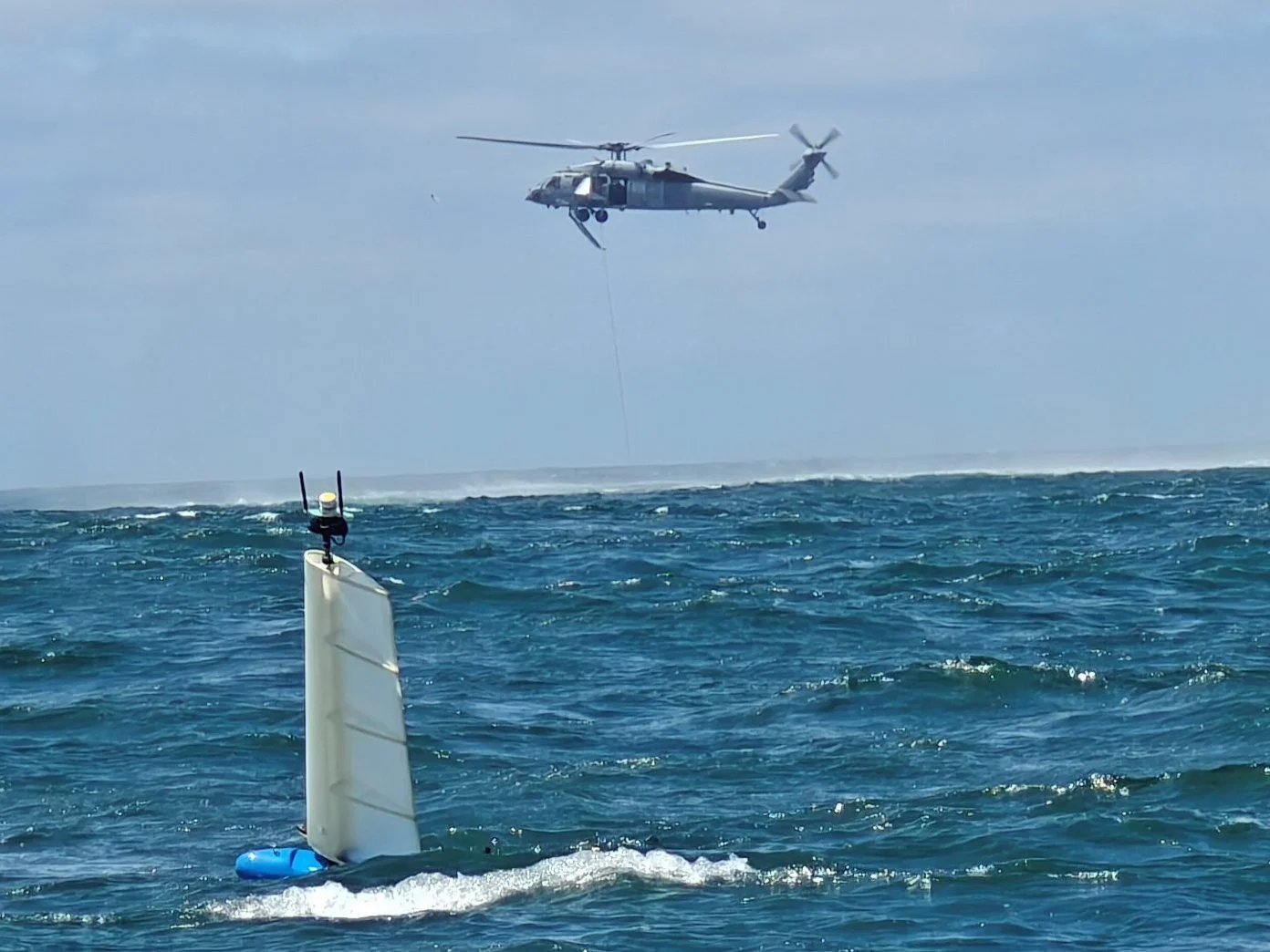
Field record: HORUS operated alongside a U.S. Navy helicopter during MCM operations at ANTX-Coastal Trident 25.
Other HORUS missions
Plan this mission with us
Buy outright, lease operations or buy the data. HORUS is accepting orders.